How does the Sentiment Analysis work?
Understand how AI platforms describe your brand and identify opportunities to improve brand perception and positioning.
Written By Tom van den Heuvel
Last updated 6 months ago

Understanding AI Sentiment Analysis
Sentiment analysis reveals how AI platforms characterize your brand when mentioning it to users, providing insights into brand perception and positioning opportunities.
Sentiment Categories
Positive Sentiment:
Recommended, excellent, high-quality language
Emphasis on benefits and advantages
Positive customer experience references
Authority and trust indicators
Neutral Sentiment:
Factual mentions without emotional language
Basic product or service descriptions
List inclusions without commentary
Objective comparison references
Negative Sentiment:
Critical language about issues or problems
Comparison disadvantages
Customer complaint references
Warning or caution language
Sentiment Tracking Dashboard
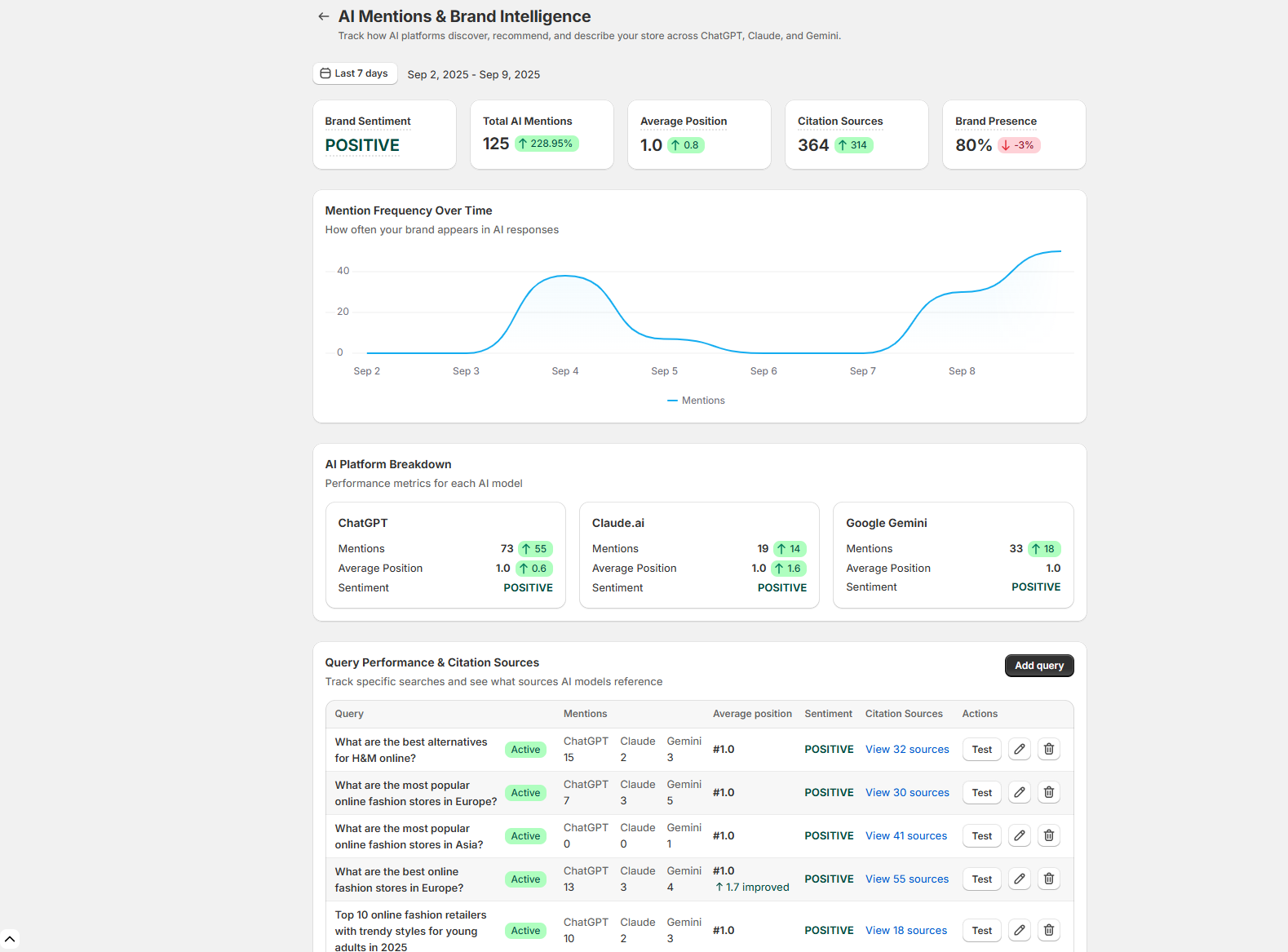
Overall Brand Sentiment
The main sentiment indicator shows:
Primary sentiment classification (Positive, Neutral, Negative)
Sentiment distribution percentage across all mentions
Trend analysis showing sentiment changes over time
Platform-specific sentiment breakdown
Sentiment by AI Platform
ChatGPT Sentiment:
How ChatGPT typically describes your brand
Common language patterns and descriptors
Context of positive vs. neutral mentions
Frequency of recommendations vs. basic mentions
Claude Sentiment:
Claude's characterization of your brand
Citation patterns and source references
Detail level and context provided
Comparison language and positioning
Google Gemini Sentiment:
Gemini's brand descriptions and recommendations
Integration with search and shopping results
Knowledge panel sentiment and information
Product recommendation language
Sentiment Analysis Insights
Positive Sentiment Indicators
Recommendation Language:
"Highly recommended," "excellent choice," "top-rated"
"Popular," "well-regarded," "trusted brand"
"High-quality," "premium," "professional-grade"
Benefit-focused Descriptions:
Specific advantages and unique features
Customer satisfaction and success stories
Performance and quality highlights
Value proposition emphasis
Authority Signals:
Industry recognition and awards
Expert endorsements and certifications
Market leadership positioning
Innovation and expertise references
Neutral Sentiment Patterns
Factual Mentions:
Basic product availability and specifications
Simple category or list inclusions
Objective feature descriptions
Standard comparison mentions
Improvement Opportunities:
Add more specific benefits and differentiators
Include customer testimonials and reviews
Highlight unique value propositions
Build authority through certifications
Negative Sentiment Analysis
Common Negative Themes:
Price or value concerns
Product limitations or drawbacks
Customer service issues
Comparison disadvantages
Addressing Negative Sentiment:
Identify specific issues mentioned
Update content to address concerns
Highlight improvements or solutions
Build positive counter-narratives
Improving Brand Sentiment
Content Optimization for Positive Sentiment
Highlight Unique Benefits:
Specific advantages over alternatives
Measurable improvements and outcomes
Customer success stories and testimonials
Professional endorsements and certifications
Build Authority and Trust:
Include credentials, awards, and recognition
Showcase expertise and industry experience
Display customer reviews and ratings
Highlight guarantees and quality assurance
Address Common Concerns:
Proactively address potential objections
Provide detailed information about limitations
Offer solutions and alternatives
Demonstrate commitment to customer satisfaction
Best Practices for Sentiment Management
Proactive Sentiment Building
Create Positive Content:
Develop customer success stories and case studies
Showcase awards, certifications, and recognition
Build comprehensive FAQ sections addressing concerns
Create educational content demonstrating expertise
Monitor and Respond:
Regular sentiment tracking and analysis
Quick response to negative sentiment drivers
Continuous content improvement and optimization
Building long-term positive brand narrative
Avoiding Sentiment Pitfalls
Don't Over-Promise:
Make realistic claims about product benefits
Include honest limitations and considerations
Avoid superlative language without backing
Focus on specific, measurable advantages
Maintain Authenticity:
Use genuine customer testimonials and reviews
Present balanced information about products
Address negative feedback constructively
Build trust through transparency